Checkmate in Style_ How Luxury Hotels Are Redefining Lobby Design Through Art and Play
Checkmate in Style: How Luxury Hotels Are Redefining Lobby Design Through Art and Play
Checkmate in Style: How Luxury Hotels Are Redefining Lobby Design Through Art and Play
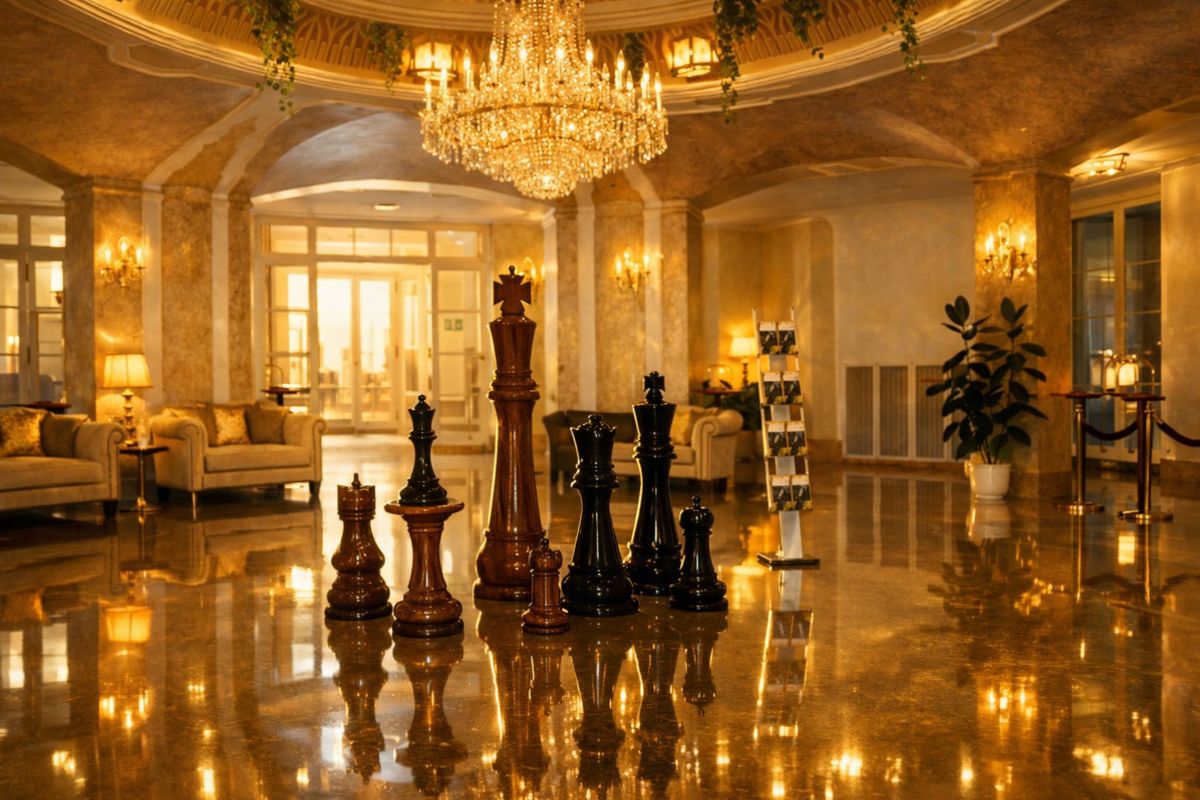
Walk into most hotel lobbies and you’ll find the usual suspects: marble counters, fresh flowers, maybe a grand piano. But every so often, a space stops you in your tracks. That’s exactly what happens when you step into this opulent lobby, where oversized teak chess pieces stand like silent sentinels on the gleaming floor. It’s not just décor. It’s a statement.
The scene feels straight out of a modern-day palace. Crystal chandeliers spill warm light across vaulted ceilings, gold-toned walls reflect a soft glow, and plush armchairs invite guests to linger. Yet the true focal point isn’t the architecture. It’s the chess set. Towering kings, queens, and rooks carved from rich teakwood command attention, their polished surfaces mirroring the marble below. This isn’t a game tucked in a corner. It’s the centerpiece.
So why giant chess in a luxury hotel? It’s a masterclass in experiential design. In an age where travelers crave Instagrammable moments and memorable stays, hotels are moving beyond function to create emotion. A giant chess set does three things at once. First, it sparks curiosity. Guests don’t just check in, they explore, photograph, and share. Second, it communicates sophistication. Chess has long been tied to strategy, intellect, and timeless class, all qualities luxury brands want to embody. Third, it invites interaction without a single word.
Material choice matters here, too. These aren’t plastic props. The pieces appear to be handcrafted from teak, a hardwood prized across Southeast Asia for its durability and deep, warm grain. Teak ages gracefully, resisting the wear of countless admiring touches. In a hotel lobby, that’s not just aesthetic. It’s practical luxury. The dark and honey tones of the wood also contrast beautifully with the golden hues of the room, turning the set into living sculpture.
Beyond beauty, there’s a psychological play at work. Chess is universal. You don’t need to speak the same language to understand the tension of a king under threat. By placing it in a lobby, the hotel creates a subtle bridge between guests. Strangers become spectators. Children stop to count the pieces. Business travelers pause between meetings. The lobby transforms from a transit zone into a social stage.
This trend signals a broader shift in hospitality design. The best hotels no longer just offer a place to sleep. They curate moments. They understand that modern luxury isn’t just thread count and room service, it’s how a space makes you feel. A giant chess set says: slow down, think, be present, and yes, play.
For designers and hoteliers, the lesson is clear. Statement pieces work when they tell a story and invite participation. For travelers, it’s a reminder to look up from the check-in desk. Sometimes, the most memorable part of your trip is waiting right in the lobby, one strategic move away.
Next time you travel, skip the standard hotel photo. Find the lobby’s king. And if you’re lucky, maybe you’ll get to make the first move.