When Chess Leaves the Table: How Giant Outdoor Chess Builds Strategy, Community, and Joy
When chess leaves the table and takes over the garden, everything changes — GiantChess.com's giant teak sets turning strategy into spectacle and every outdoor space into a stage for community, joy, and connection.
When Chess Leaves the Table: How Giant Outdoor Chess Builds Strategy, Community, and Joy
Chess has always been a game of the mind. Silent, intense, and often confined to small wooden boards in living rooms or quiet tournament halls. But take that same game, scale the pieces to knee-height, move it to a sunny park, and something remarkable happens. It stops being just a mental battle. It becomes theater.
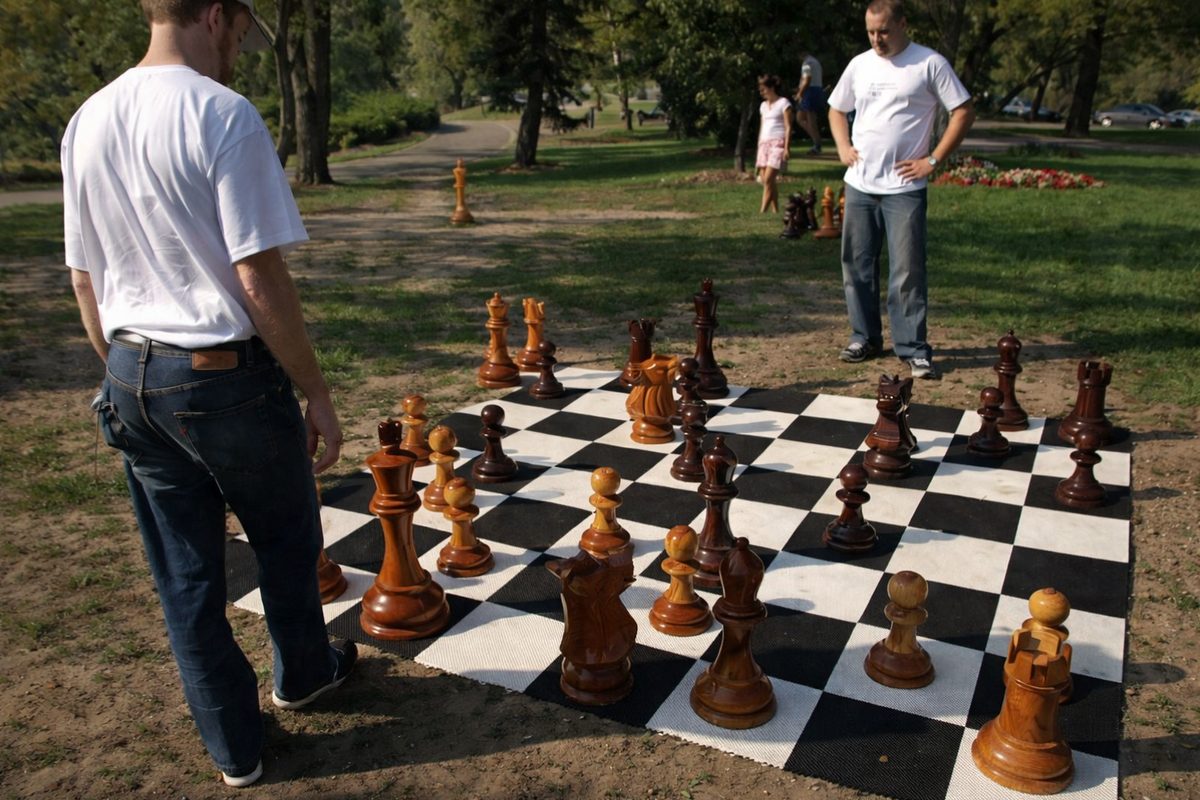
The photo says it all: two players stand facing each other across a sprawling black-and-white board laid on the grass. The pieces are polished teak, heavy enough that each move requires thought and actual physical effort. There are no chairs, no clocks, no hushed spectators. Just open sky, curious onlookers, and the satisfying thud of a knight being placed. This is chess unplugged, and it’s quietly changing how we think about play.
1. The Physicality of Strategy
When a rook stands as tall as your thigh, strategy becomes visceral. You can’t absentmindedly slide a piece with two fingers. You have to walk the board, bend down, lift, and commit. That added friction slows the game down in the best way. Every move has weight, literally. Players circle the board, viewing angles you never consider when hunched over a table. It forces you to embody your strategy, not just calculate it.
2. Public Play Breaks Down Walls
Traditional chess can be intimidating. The clocks, the notation, the elite aura. Giant outdoor chess invites everyone in. Kids stop mid-bike ride. Grandparents on a morning walk pause to watch. The scale makes it a spectator sport. Suddenly, explaining why a pawn structure matters doesn’t feel like a lecture, it’s a story you can point to. The board becomes a public stage, and the game becomes an invitation.
3. It’s a Workout for Body and Brain
Don’t underestimate the exercise. A 30-minute game means you’ll walk dozens of laps around the board, squat to move pawns, and carry queens that weigh several kilos. It’s chess meets light functional fitness. Studies on “embodied cognition” suggest that physical movement improves problem-solving and memory. When your whole body is involved in the checkmate, you remember it differently.
4. The Craft Behind the Pieces
These aren’t plastic toys. The set in the photo shows the rich grain of teak, a hardwood prized for durability and beauty. Crafting a full giant set is serious woodworking. Each piece is turned, carved, and finished by hand. In many Southeast Asian communities, including Indonesia, teak chess sets have become a form of functional art. They last decades outdoors, aging gracefully while rain and sun deepen the wood’s character. You’re not just playing a game, you’re moving sculptures.
5. Public Parks Are the New Chess Clubs
Cities from New York to Surabaya are installing permanent giant chess boards in parks and plazas. Why? Because they work. Unlike a basketball court, a chess board needs no teams, no skill minimum, no language. Two strangers can start a game without saying a word. It’s one of the cheapest, highest-ROI forms of community infrastructure. It gives public space a purpose and gives people a reason to linger, talk, and connect.
6. It Teaches Patience in a Fast World
We live in a swipe-and-scroll culture. Giant chess fights that. You can’t rush when your bishop requires two hands to move. The game forces you to stand, breathe, and consider. For kids, it’s a lesson in delayed gratification. For adults, it’s a form of active meditation. The park is quiet, the sun is warm, and the only notification is your opponent saying “check.”
7. A Game That Scales With Life
The beauty of chess is that it never gets old. But the way we play it should evolve. Giant chess doesn’t replace the 5-minute blitz game on your phone. It complements it. It reminds us that strategy isn’t just in the head, it’s in the legs, the hands, and the shared space between two people. Sometimes, to think bigger, you have to play bigger.
So next time you see a giant board in a park, don’t just walk by. Pick up a pawn. Feel its weight. Make a move. You might find that chess isn’t just a game of kings. On the grass, under the trees, it’s a game for everyone.