
Stepping off the main path and wandering into the quieter, more secluded corners of a classic English estate always feels like uncovering a secret, but my recent visit to a quiet corner of the Cotswolds yielded a truly remarkable surprise. Leaving the rose arches behind, I found myself in a sprawling, meticulously maintained garden that opened up into a wide expanse of impossibly green lawn, bordered by a dense wall of mature trees that whispered of old stories and perhaps, ancient magic.
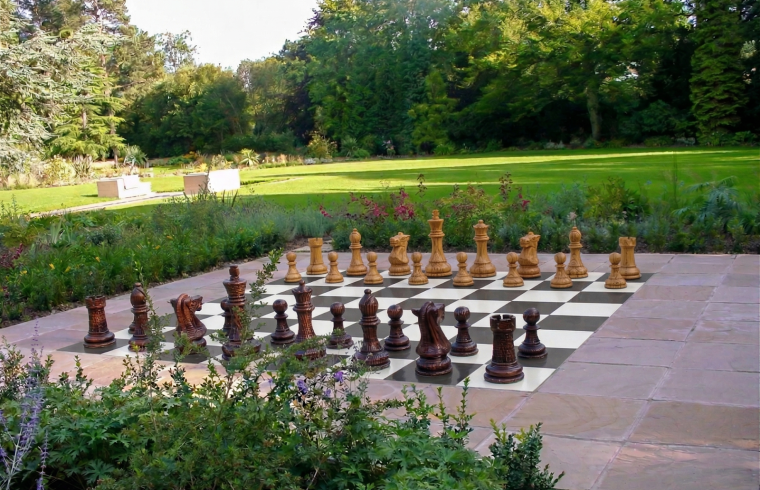
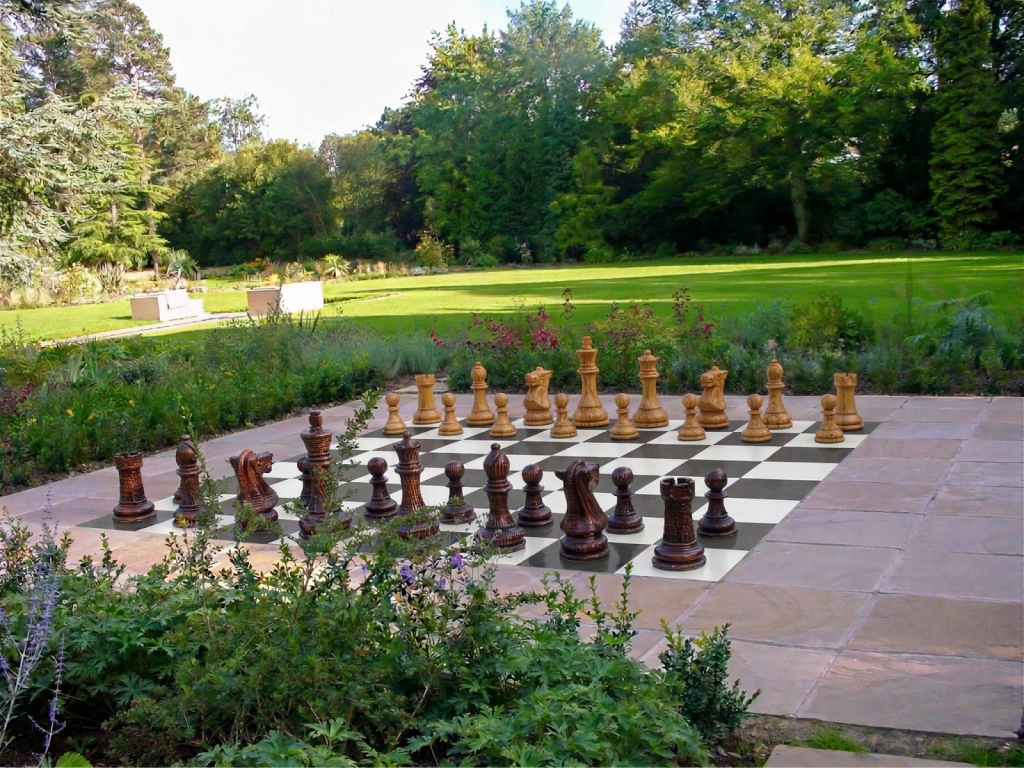
In the center of a paved stone patio, integrated perfectly into the landscape, was not a fountain or a standard flower bed, but something infinitely more whimsical and engaging: a giant, outdoor chessboard. This wasn’t just a novelty; it was a grand, almost ceremonial installation that commanded the attention of anyone lucky enough to stumble upon it.
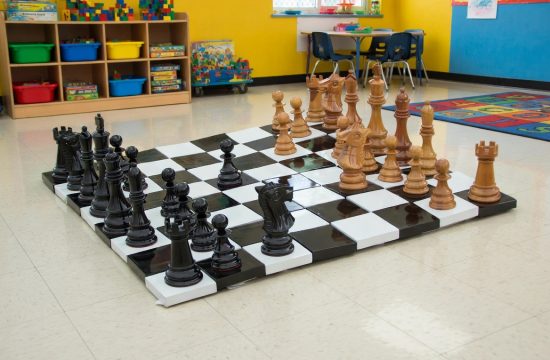
The scale of it was immediately impactful. Forget standard tabletops; this was a true floor game. The “black” and “white” squares, meticulously crafted from squares of dark grey polished marble and lighter, dappled white marble, were large enough for two people to stand within them. The board itself felt like a piece of monumental art, a stunning juxtaposition of classical garden architecture and playful human engagement.
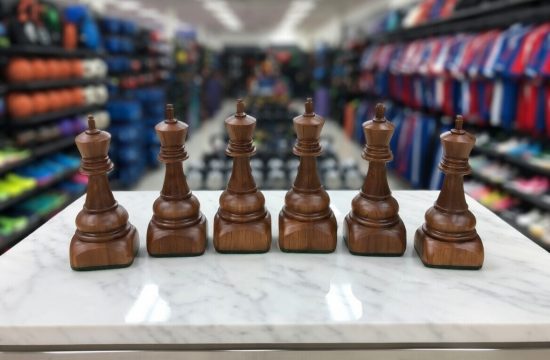
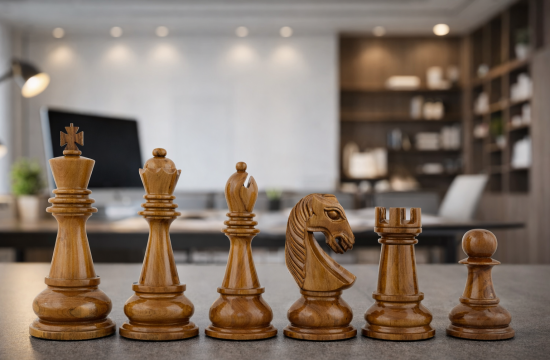
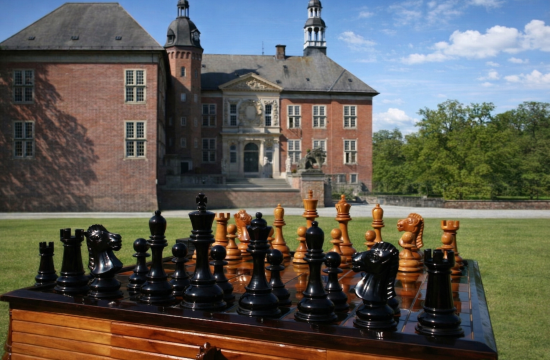
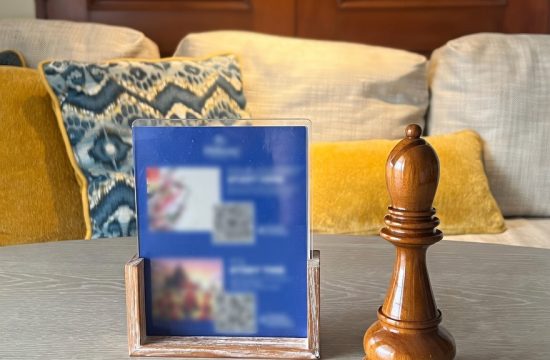
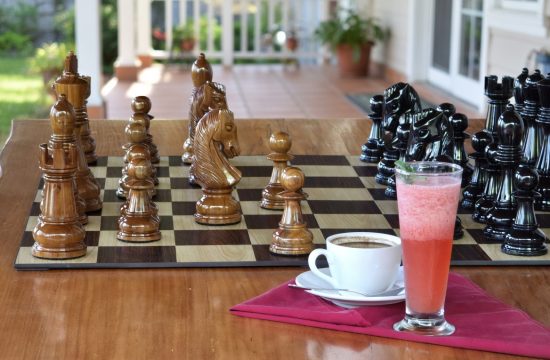
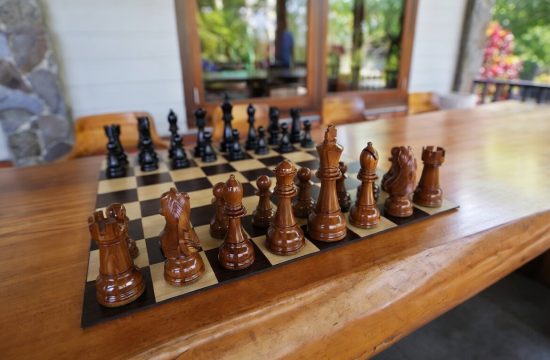
But it was the chess pieces themselves that truly captured the imagination. Crafted from beautiful, weathered wood with rich, textured grains, they were massive, tactile sculptures. These weren’t your average plastic oversized novelties; they had a weight and presence. The dark pieces were a deep, dark mahogany, and the light pieces were a natural, warm, golden wood. Just holding one, with its carved details still sharp, felt like interacting with history.
The absolute pinnacle of this carved collection was the King. Standing as the leader, it was a formidable figure, towering at 60 centimeters tall! To place it in perspective, this single piece was as tall as a small child’s waist. The sheer effort required to move just one piece, let alone a whole army, was clear. Moving a Rook or a Knight required a true, two-handed commitment.
This was clearly a garden that didn’t take itself too seriously. It invites a level of play that is so often missing in formal landscapes. I can only imagine the delightful chaos of a family game, with kids (or determined adults) dragging pieces across the board, discussing strategy with grand gestures, and maybe even a dog getting confused by the new ‘trees’ on the patio.
I stood there for a long time, not just looking at it but observing its context. In the background, past the borders of fragrant lavender and blooming wildflowers, two large white planter boxes stood sentry, adding a touch of formal symmetry. Further back, the dense woodland acted as a perfect, dark-green proscenium, making the entire board and its pieces pop against the natural beauty. It was an island of human ingenuity in a sea of wild, managed nature.
Finding this kind of installation is a reminder of why we travel. It’s the unique, the hand-crafted, and the delightfully unexpected that truly make a place memorable. This isn’t just a garden with a game; it’s a statement about leisure, about art in unexpected places, and about creating shared experiences.
If your travels ever bring you to the kind of country estate that has hedges thick enough to get lost in, don’t just stay on the main path. Take the side trails. Wander past the kitchen garden. And maybe, just maybe, you’ll find a grand chessboard where the King is 60 centimeters tall, waiting for someone with enough muscle and moxie to make the first move.
http://GiantChess.com
info@giantchess.com
Chat to: +6281 1332 5397
or
http://wa.me/628113325397