
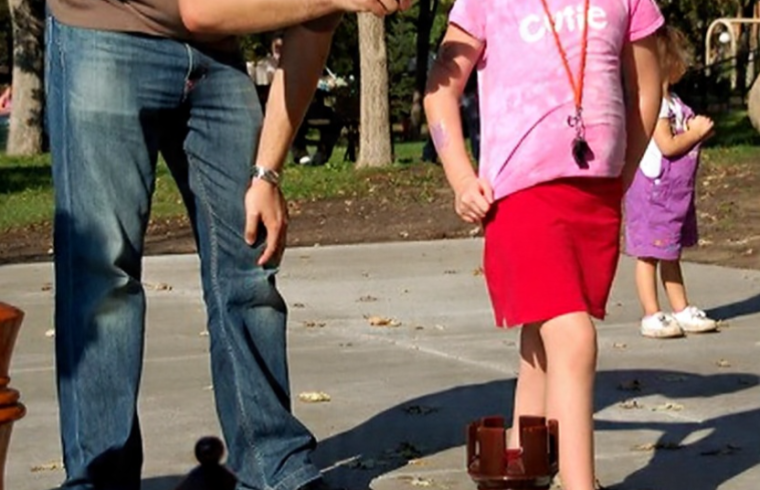
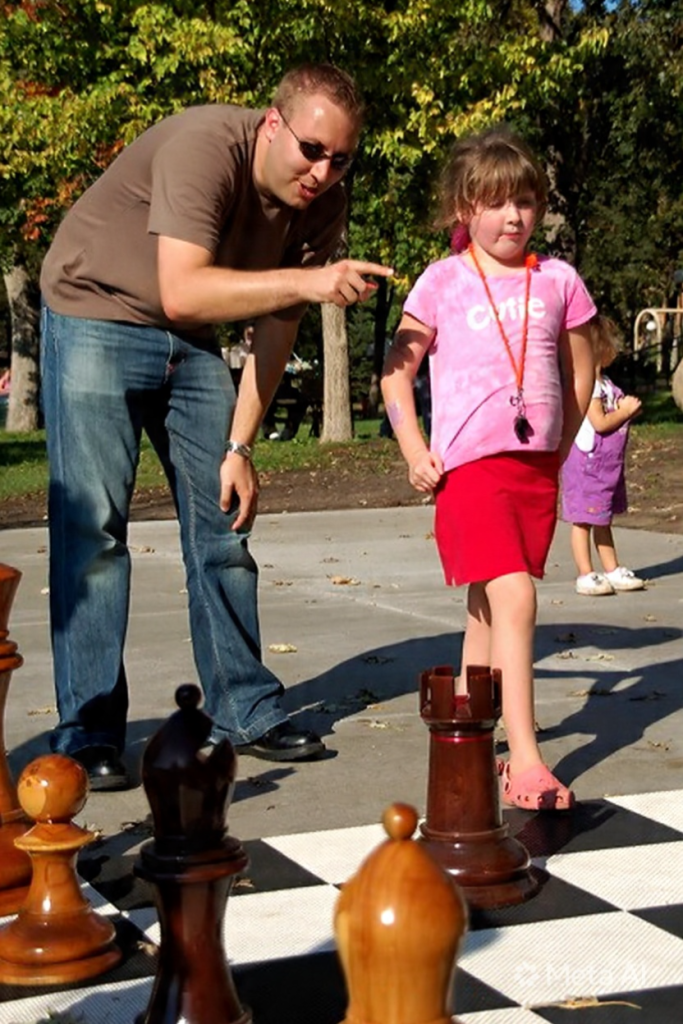
In a world dominated by screens and quick dopamine hits, a simple scene in the park can still stop us in our tracks. A father leans in, pointing toward a massive wooden rook. A young girl, brows furrowed in concentration, studies the oversized board beneath her feet. This isn’t just a game of chess. It’s a masterclass in patience, strategy, and connection, scaled up for everyone to see.
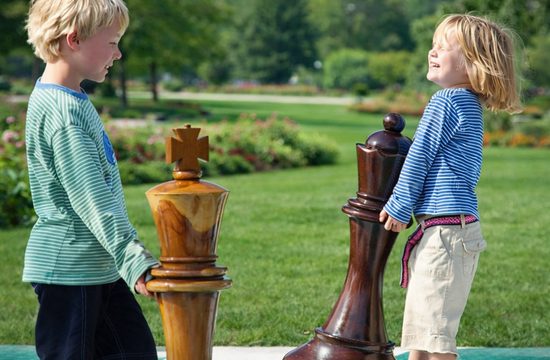
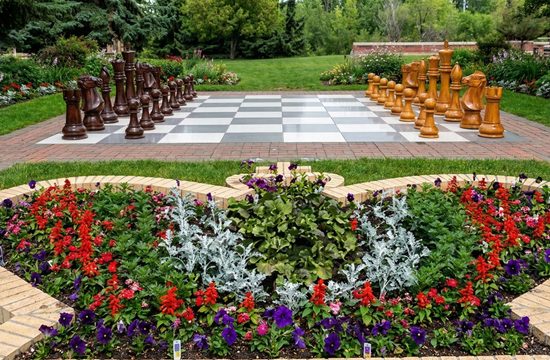
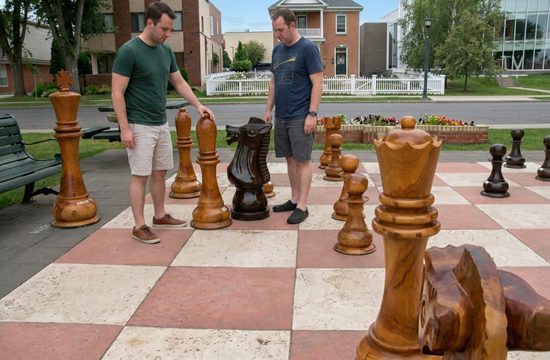
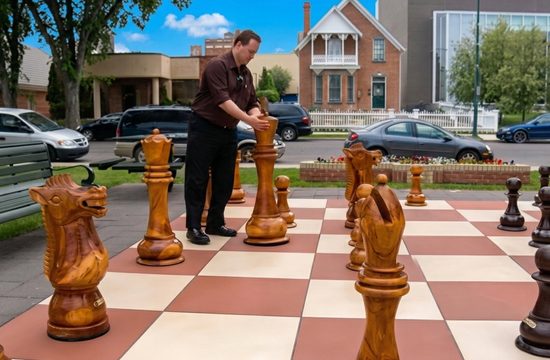
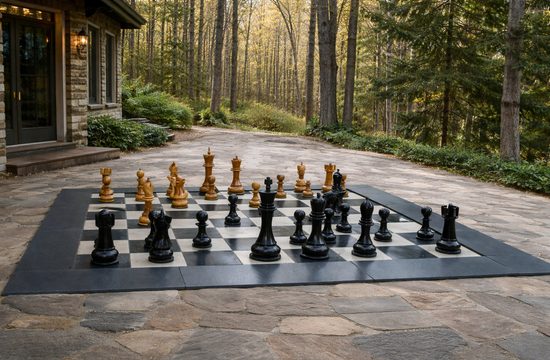
Giant chess sets like this one transform a quiet, cerebral game into a full-body, public experience. The pieces are heavy enough that every move requires intention. You can’t absentmindedly slide a pawn while scrolling your phone. You have to walk, lift, decide, and commit. For kids, that physicality makes abstract strategy feel real. For adults, it’s a reminder that thinking deeply can be active, social, and even fun.
What’s striking about this photo is the dynamic between the two players. The man isn’t dominating the game or telling the girl what to do. He’s guiding, pointing, and asking. That’s the heart of mentorship. Chess teaches children how to think ahead, evaluate consequences, and handle losing with grace. But when it’s played outdoors, with someone they trust, it also teaches something rarer: presence. No notifications, no rush, just one move at a time.
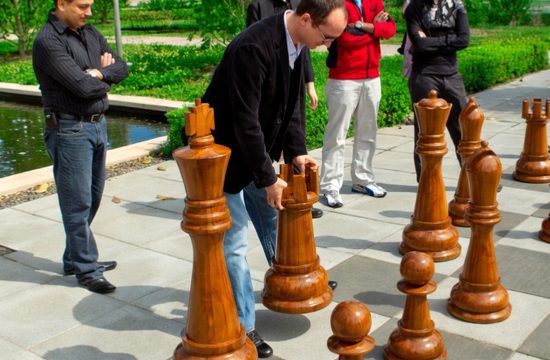
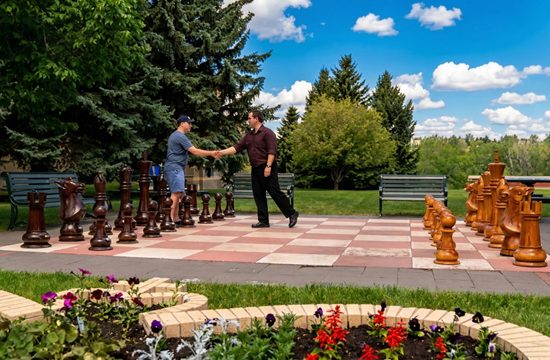
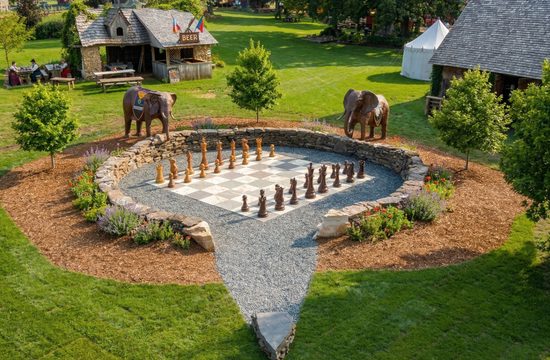
Public spaces with installations like this do more than entertain. They create accidental community. Strangers pause to watch. Another child waits for her turn in the background. A game that usually happens in silence across a small table suddenly becomes a spectator sport, inviting conversation and connection. Parks aren’t just for jogging or playgrounds. They’re also for thinking out loud, together.
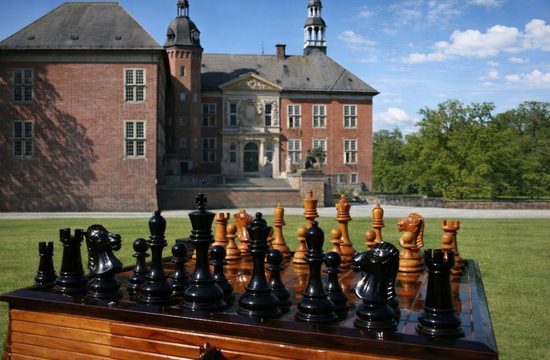
The craftsmanship of the set matters too. These teak pieces aren’t plastic. They have weight, grain, and warmth. In an age of disposable everything, there’s value in objects that feel permanent. Kids who play with well-made things learn to respect them. They learn that some games are worth slowing down for, that not everything needs to be instant to be rewarding.
Outdoor chess also levels the playing field. You don’t need expensive gear, a membership, or a high-speed connection. You need curiosity and someone willing to play. It’s intergenerational by design. Grandparents can teach grandkids. Teenagers can challenge adults. And everyone watching learns something about strategy, or just about each other.
We often talk about “quality time” with our kids, but we rarely define it. Maybe it looks like this: sun on your back, a problem to solve together, and no scoreboard except the one you make in your head. The lesson isn’t just how to win at chess. It’s how to think, how to wait, and how to enjoy the process.
So next time you see a giant chessboard at a park, don’t just walk by. Pick up a knight. Invite someone to play. The biggest moves in life usually start with the smallest ones.
http://GiantChess.com
info@giantchess.com
Chat to: +6281 1332 5397
or
http://wa.me/628113325397