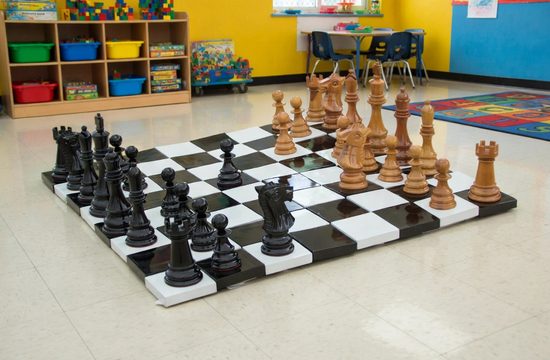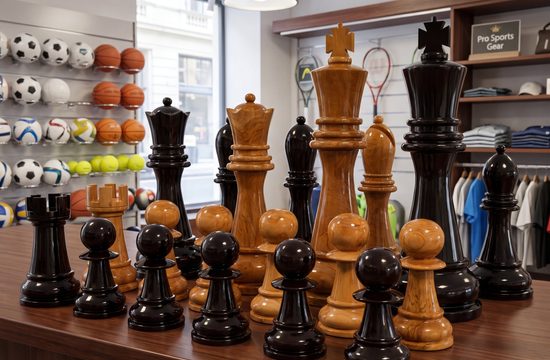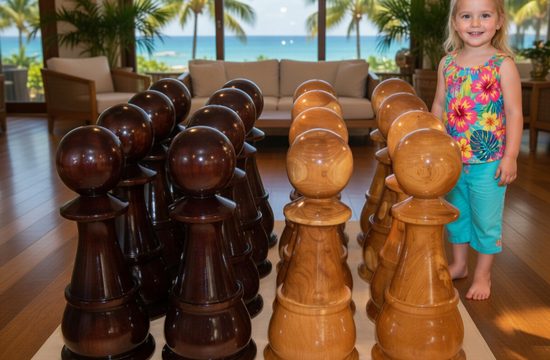

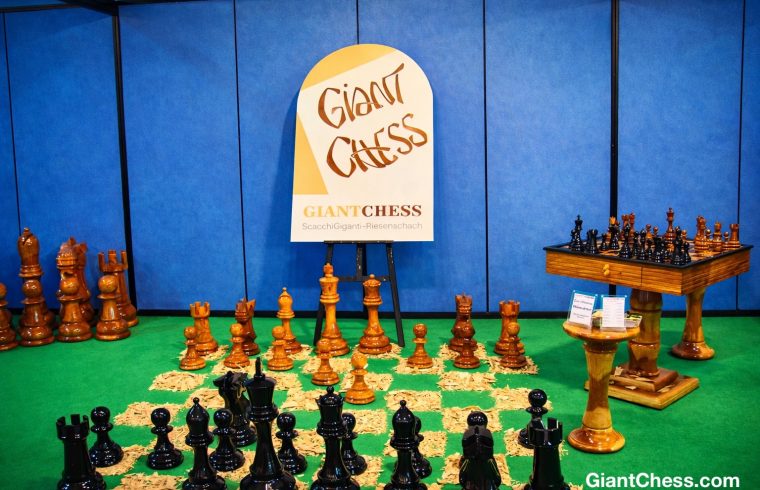
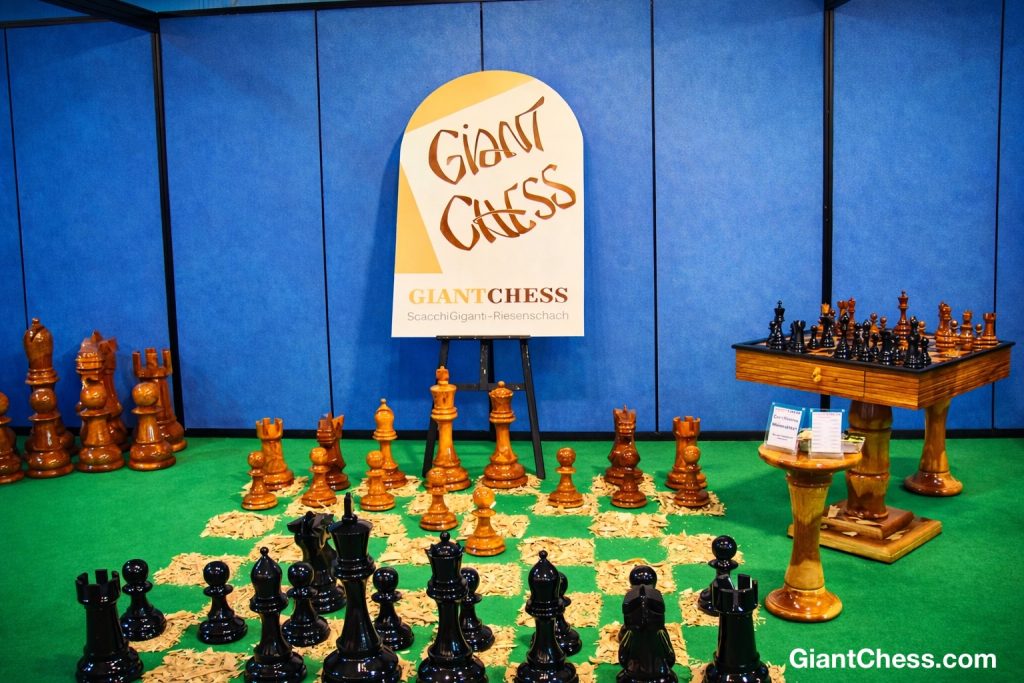
The first time I stumbled upon the Giant Chess exhibition, I felt as though I had stepped into a world where intellect met artistry on a grand stage. The air carried the faint scent of polished wood, and before me stood towering chess pieces — kings, queens, knights, and pawns — carved from solid teak, their surfaces gleaming under soft exhibition lights. It wasn’t just a game anymore; it was a spectacle.
The floor beneath them was a patchwork of woven straw mats, forming a checkered battlefield that stretched across a lush green carpet. Each square seemed alive, glowing with the warmth of craftsmanship. The black pieces stood proud and glossy, their reflections sharp and confident, while the brown teak pieces radiated a quiet dignity, their natural wood grain telling stories of age and endurance.
Behind this magnificent display rose a sign that read GIANT CHESS, its bold letters echoing the ambition of the artisans who dared to enlarge a centuries-old game into something monumental. Beneath it, translations in Italian and German — ScacchiGiganti-Riesenschach — whispered of chess’s universal charm, a language understood by thinkers across continents.
To the right, a smaller wooden table held a regular chessboard, almost humble in comparison. It was a reminder of scale — how the same game could exist both in the palm of your hand and in the sweep of your stride. Visitors paused there, first to admire the familiar, then to marvel at the extraordinary.
Each teak piece was a sculpture in its own right. The knights’ curves captured motion mid-gallop, the bishops’ slender spires reached upward like cathedral towers, and the kings wore crowns that seemed to command respect even in silence. The artisans had not merely carved wood; they had breathed life into strategy. Teak, with its golden hue and enduring strength, lent the pieces a timeless elegance — resistant to decay, yet rich with warmth.
The exhibition space itself felt like a stage. The green carpet and blue partition walls framed the display like a painting, the colors chosen to soothe the eye and highlight the wood’s natural tones. Soft shadows fell beneath the pieces, grounding them in reality while hinting at the imagination that had brought them to life.
Watching visitors move among the pieces was like observing actors in a play. Some leaned close to inspect the craftsmanship, others stood back to take in the grandeur. A few even mimed chess moves, stepping forward as if to capture a pawn or defend a queen. In that moment, chess became more than a game — it became a dance of giants.
What struck me most was how this display bridged worlds: the intellectual and the artistic, the traditional and the modern. It reminded me that chess, though ancient, continues to evolve — not just in strategy but in form. The giant teak pieces were proof that beauty and intellect can coexist, that even the most logical of games can be a work of art.
As I left the exhibition, I couldn’t help but glance back one last time. The kings and queens stood motionless, yet they seemed alive — guardians of a timeless game, carved from nature’s finest wood, waiting for the next player bold enough to challenge them. And in that stillness, I realized: chess isn’t just about winning. It’s about creation, imagination, and the quiet elegance of thought made visible.
http://GiantChess.com
info@giantchess.com
Chat to: +6281 1332 5397
or
http://wa.me/628113325397