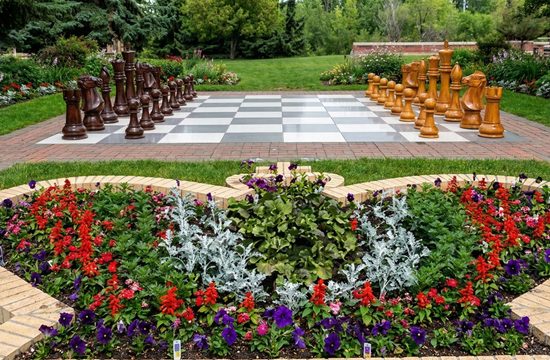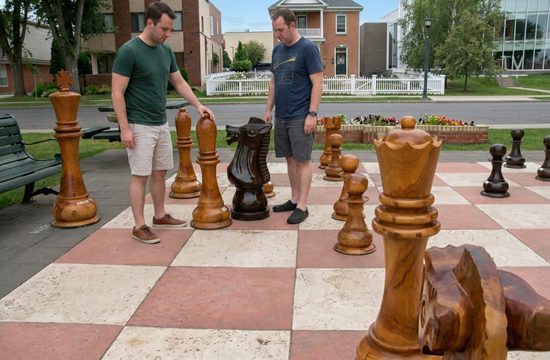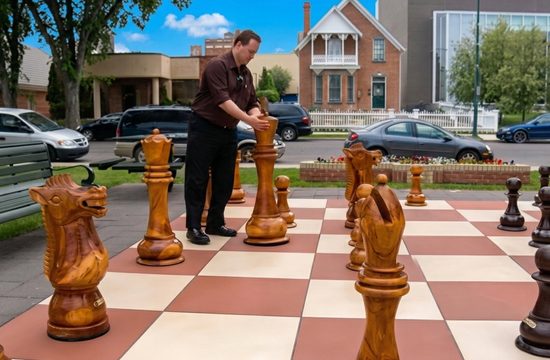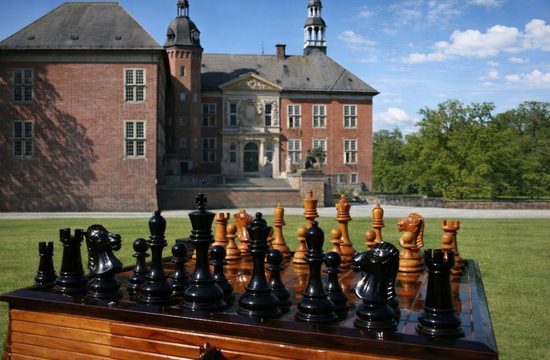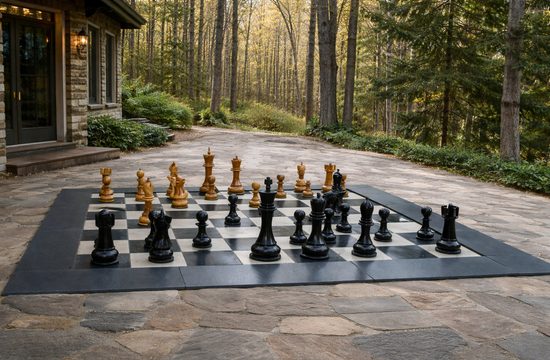

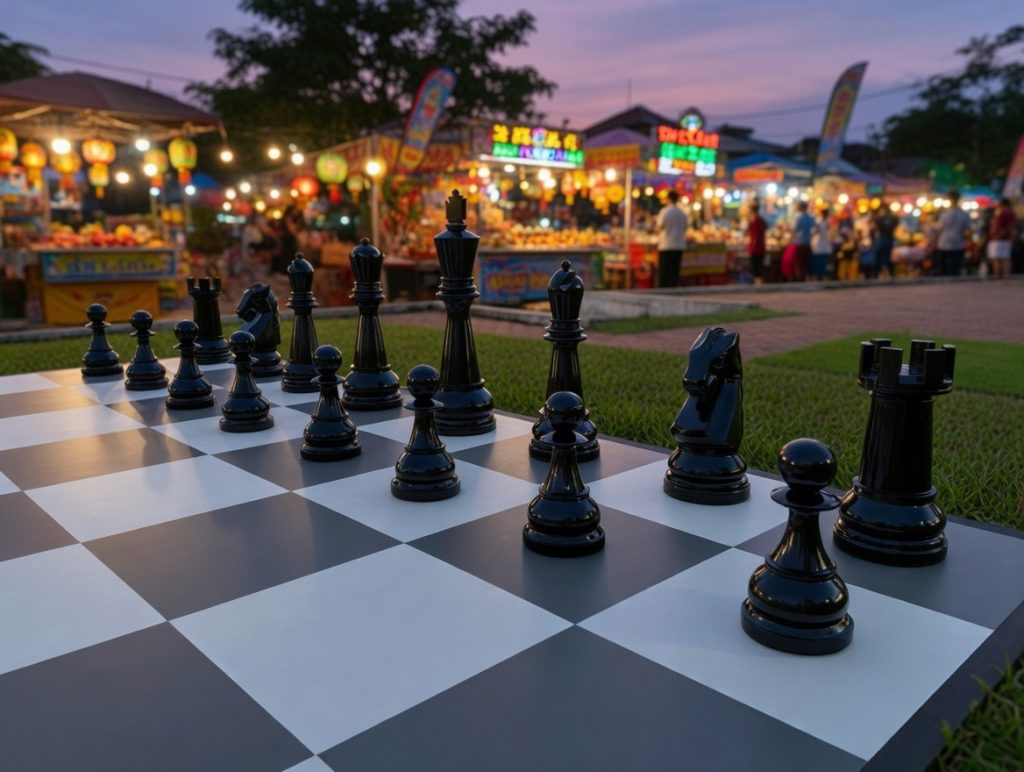
City parks are more than just patches of green. They are living rooms for entire neighborhoods, places where strangers become friends and quiet afternoons turn into shared memories. Lately, a new centerpiece has been claiming space on the grass in parks from Surabaya to Seattle: the giant teak chess set. Under string lights and twilight skies, these oversized kings and pawns are doing more than just decorating the lawn. They are bringing people back together.
More Than a Game, It’s a Gathering Point
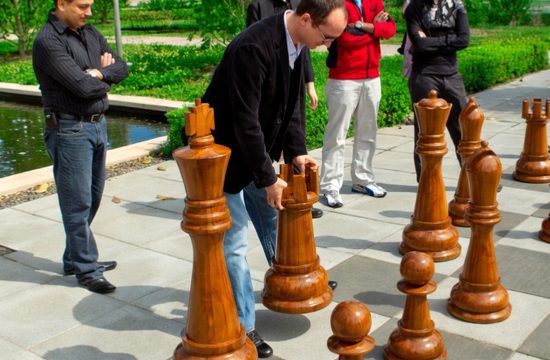
Walk past any public square at dusk and you’ll notice it. Kids drag their parents toward the board. Teenagers pause their scrolling to debate the next move. Seniors who grew up playing in village halls pull up a bench and become instant coaches. Unlike a phone screen, a giant chessboard demands that you look up, talk, and think out loud. One move often draws a crowd, and suddenly a solo pastime becomes a community event.
Why Scale Changes Everything
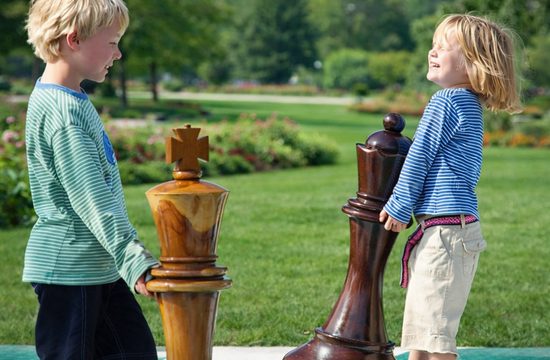
There is something disarming about a rook that reaches your knee. The physicality of giant chess removes intimidation. You do not need to be a grandmaster to lift a knight. You just need curiosity. The size invites collaboration. Teams form naturally. “You take the queen’s side, I’ll handle the pawns,” becomes a common strategy. In a world of digital isolation, hoisting a bishop is a surprisingly effective icebreaker.
Teak, Grass, and the Art of Slow Living
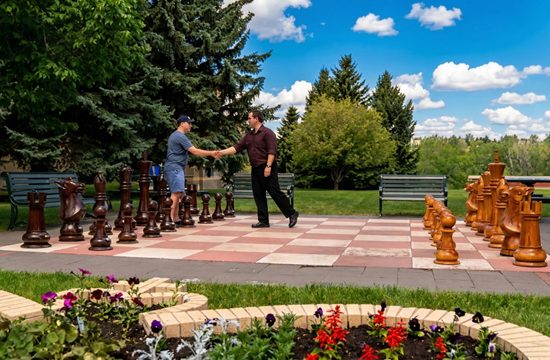
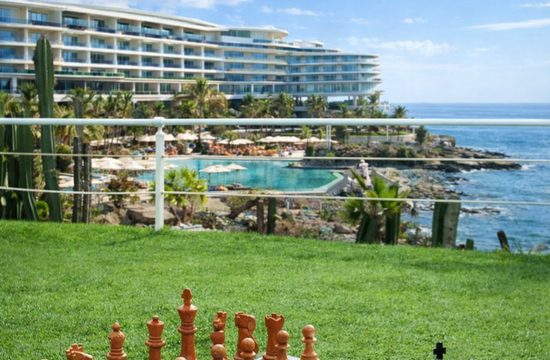
Crafted from solid teak, these sets are built to weather sun and rain, just like the communities they serve. Teak’s warm grain and solid weight give the game a sense of permanence. Placing it on grass instead of concrete is intentional. It signals that this is play, not competition. Bare feet, evening breezes, and the distant buzz of a night market create a setting where winning matters less than participating.
The Night Market Effect
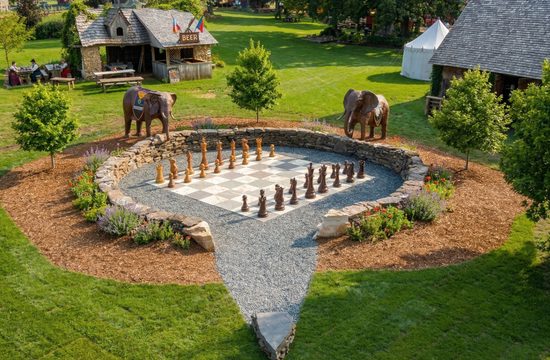
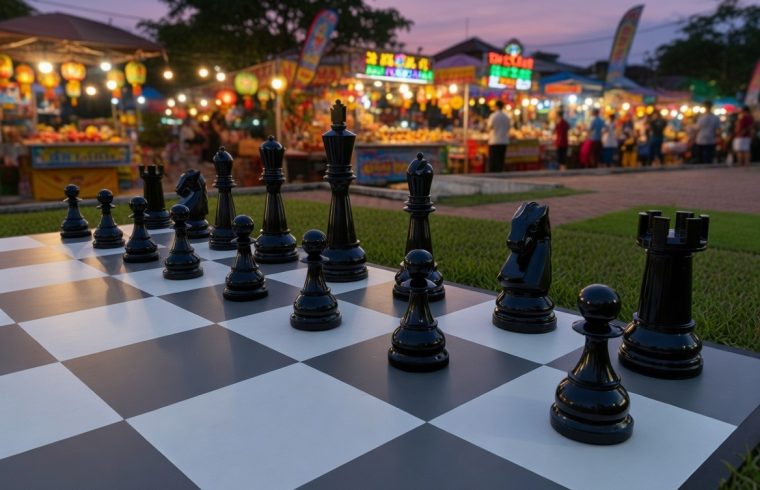
Set a chessboard near food stalls and lanterns, like the scene above, and something interesting happens. The park stops being a pass-through space and becomes a destination. Parents grab satay while kids plot their opening gambit. Vendors get new customers. Date nights start with a match and end with dessert. Urban planners call this “activation.” We just call it a good Tuesday evening.
From Mind Sport to Civic Tool
Cities are rediscovering that public games reduce vandalism, increase safety, and encourage multi-generational interaction. A 45-minute game slows down the pace of the park. People linger. They notice each other. They look out for each other. And when the pieces are this beautiful, residents take pride in them. Volunteer groups often form to set up the board each morning and store the pieces at night.
Your Move: Building the Culture
Want this in your local park? Start small. Most city departments are open to pilot programs if a community group commits to stewardship. Pitch it as free programming, not just furniture. Host “Learn to Play” Sundays. Invite a local woodworker to talk about teak. Challenge the food stall owners to a vendors-versus-visitors match. The goal is not to create champions. It is to create a reason to show up.
The Real Endgame
In the end, no one remembers who won the match last Thursday. They remember the laugh when someone moved a pawn with both hands. They remember the 8-year-old who checkmated her uncle. They remember that the park felt alive. Giant chess does not solve every urban problem, but it asks a better question: What if we played together more?
So next time you see a board laid out at golden hour, do not just walk by. Pick up a piece. The city is your opponent, and your community is your teammate. Your move.
http://GiantChess.co
info@giantchess.com
Chat to: +6281 1332 5397
or
http://wa.me/628113325397